Lower Unit Rate vs. Lower Standing Charge
Choosing between a lower unit rate and a lower standing charge can significantly impact your energy bills. The best choice depends on your energy usage. Let's explore both options to help you make an informed decision.
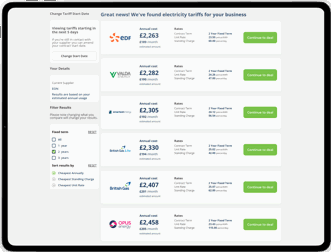
FREE Standing Charge
No standing charge tariffs available
£0.00 standing charge available on select tariffs


Which Tariff Should I Choose?
A low unit rate or standing charge on an energy comparison might look like a bargain. Most energy suppliers offer one or the other, and each option is designed for a different type of customer.
It might seem like choosing the lower unit rate is always best, but it can be confusing. In some cases, certain customers could actually save more with a higher unit rate.
This guide will help you decide when it makes sense to pick a lower unit rate or a lower standing charge for your energy tariff.
The Argument For A Lower Standing Charge
A standing charge is a fixed daily amount from your energy supplier to cover the cost of delivering electricity to your home or business. This charge applies to your bill no matter how much energy you use.
If you don't use a lot of energy units (kWh), you could benefit financially by choosing a lower standing charge.
Typically, you're looking at seasonal businesses that would benefit the most from a lower standing charge. This is because a supplier will often increase the unit rate if there's a lower standing charge.
You can read more about standing charges here.
The Argument For A Lower Unit Rate
The unit rate is the price you pay for your gas and electricity. For example, electricity is measured in kilowatt hours (kWh). Your energy supplier sets the rates and charges you for each kWh you use.
If you use a lot of energy per month, you could substantially save money by going for the lowest unit cost available to you.
Average Unit Rates for UK Households - 2026
According to Ofgem, the average unit rates for UK households in 2025 are:
Electricity (Direct Debit)
- Unit Rate: 26.35p per kWh
- Standing Charge: 53.68p per day
Gas (Direct Debit)
- Unit Rate: 6.29p per kWh
- Standing Charge: 34.03p per day
These rates apply to customers paying by Direct Debit and include VAT at 5%.
Average Unit Rates for UK Businesses - 2026
Electricity
- Unit Rate: 29.6p per kWh
- Standing Charge: 40.5p per day
Gas
- Unit Rate: 7.3p per kWh
- Standing Charge: 39.9p per day
Should I Choose a Lower Unit Rate or a Lower Standing Charge?
- High usage homes or businesses: Lower unit rate + higher standing charge is usually better.
- Low usage or seasonal businesses: A Lower standing charge could save more money. Some suppliers even offer.
What Is Better For Your Business?
For businesses, especially those that are seasonal or operate occasionally, choosing a no standing charge tariff can lead to considerable savings.
A seasonal cafe operating only during the day can benefit from a no standing charge tariff, avoiding daily fees during off-hours.
However, tariffs with lower standing charges typically have higher unit rates. So using lots of energy on this tariff type would cost more.